Best CFD Demo Accounts 2026: 6 Platforms to Practice Risk-Free

A demo account is the only way to test a CFD broker without risking real capital — and the differences between demo offerings matter more than most traders realize. Some brokers give you 30 days and cut you off; others provide unlimited access but with unrealistic execution that doesn't reflect live conditions. This guide covers the six best CFD demo accounts available in 2026, ranked by what actually matters: realistic market conditions, platform access, time limits, and the transition path to live trading.
Why demo accounts matter
CFD trading carries substantial risk — between 63% and 89% of retail accounts lose money, according to broker disclosures required by European regulators. A demo account lets you learn platform mechanics, test strategies, and understand how spreads, leverage, and overnight fees work before committing real funds. The best demo accounts replicate live conditions closely enough that skills transfer directly; the worst create false confidence with artificially tight spreads and perfect execution.
Three factors separate good demo accounts from bad ones:
- Time limits: Some brokers expire demo access after 30 days, forcing you to open a live account or lose your practice environment. Unlimited demos let you test strategies over market cycles.
- Market realism: Demo spreads should match live spreads. Execution should include realistic slippage during volatile periods. Virtual capital should be resettable so you can practice risk management scenarios.
- Platform parity: The demo should offer the same platforms, instruments, and tools as the live account. A demo limited to basic web trading when the live account runs MT5 teaches the wrong skills.
Quick comparison: Best CFD demo accounts 2026
| Broker | Demo Duration | Virtual Capital | Platforms | Live Spread Match |
|---|---|---|---|---|
| Pepperstone | 60 days (extendable) | $50,000 | MT4, MT5, cTrader, TradingView | Yes |
| Capital.com | Unlimited | $10,000 (resettable) | Proprietary, TradingView, MT4 | Yes |
| IG | Unlimited | £10,000 | IG Platform, MT4, ProRealTime | Yes |
| XTB | 30 days | $100,000 | xStation 5 | Yes |
| Plus500 | Unlimited | $50,000 | Proprietary | Yes |
| eToro | Unlimited | $100,000 | eToro Platform | Partial |
1. Pepperstone — Best for serious strategy testing
Pepperstone's demo account is built for traders who want to test strategies under realistic conditions before going live. The standard demo runs for 60 days with $50,000 in virtual capital — longer than most competitors — and can be extended by contacting support if you need more time. More importantly, Pepperstone demos replicate live spread conditions accurately, including the tighter raw spreads on Razor accounts.
Platform access is comprehensive: MT4, MT5, cTrader, and TradingView are all available in demo mode with full functionality. This matters because each platform handles order execution differently, and learning on the platform you'll actually use prevents re-learning when you go live. The cTrader demo is particularly strong for testing algorithmic strategies through cAlgo.
The demo covers Pepperstone's full instrument range: 60+ forex pairs, major indices, commodities, and crypto CFDs. Execution speed in demo mode mirrors the 77-millisecond average market order execution Pepperstone achieves on live accounts — one of the few brokers where demo execution genuinely reflects live performance.
Best for: Active traders testing scalping or day-trading strategies who need realistic execution
Limitation: 60-day expiry requires extension request; not unlimited by default
2. Capital.com — Best for beginners with unlimited access
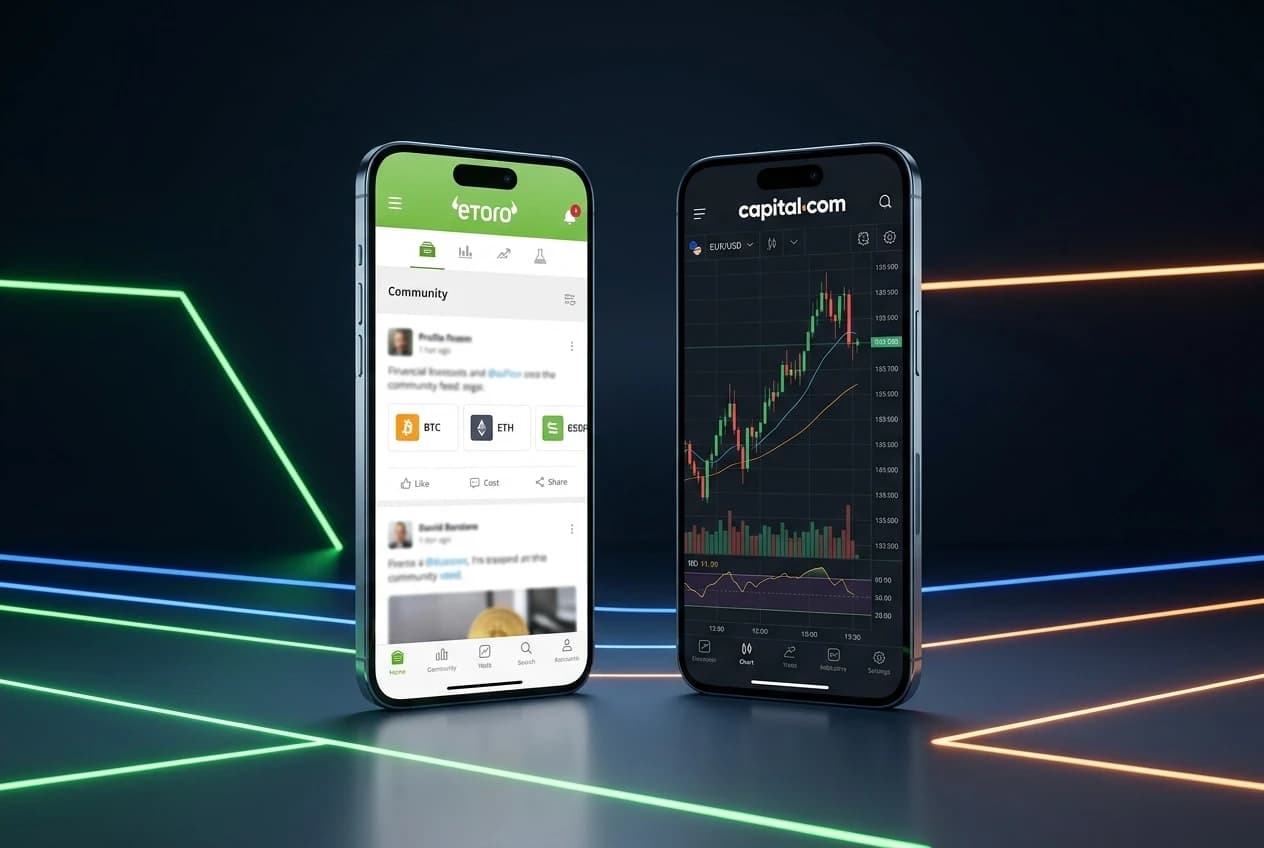
Capital.com offers the most accessible demo account for new CFD traders. Registration takes under two minutes — email and password only, no phone verification or document upload required for demo access. The demo is unlimited in duration with $10,000 in virtual capital that can be reset to the starting balance whenever you want, allowing you to practice risk management scenarios repeatedly.
The demo runs on Capital.com's proprietary platform with TradingView integration, giving you access to professional-grade charting tools without additional setup. The platform includes the AI-powered Investmate educational system, which provides real-time feedback on trading behavior — a feature that actually works better in demo mode where mistakes don't cost real money.
Spread conditions on the demo match live accounts accurately. Capital.com's average EUR/USD spread of 0.64 pips appears consistently in demo mode, and the 3,000+ instrument range (forex, indices, commodities, shares, crypto) is fully accessible. The mobile app demo is identical to the live version, useful for traders who plan to monitor positions on mobile.
Best for: Complete beginners who need unlimited practice time and educational support
Limitation: $10,000 virtual capital is lower than competitors (though resettable)
3. IG — Best for professional platform access
IG's demo account provides access to the full institutional-grade platform suite that makes IG the structural leader among regulated brokers. The demo is unlimited in duration with £10,000 in virtual capital, and crucially includes access to all three platform options: the proprietary IG trading platform, MetaTrader 4, and ProRealTime for advanced charting.
The instrument range in demo mode matches IG's live offering: 19,500+ instruments across forex, indices, shares, commodities, and options. This breadth matters for traders who want to test strategies across asset classes or practice with instruments they can't access elsewhere. The demo includes DMA (Direct Market Access) simulation for share CFDs, showing how order book trading works before committing real capital.
IG's demo spreads reflect live conditions, including the variable spreads that widen during low-liquidity periods. This realism is valuable — traders who learn on artificially stable demo spreads often struggle when live spreads spike during news events. The demo also includes access to IG's research and analysis tools, news feeds, and economic calendar integration.
Best for: Traders who want to test IG's full platform suite and instrument range before committing
Limitation: £10,000 virtual capital is fixed; requires new demo account to reset
4. XTB — Best platform experience (but time-limited)
XTB's demo account showcases xStation 5, consistently ranked among the best proprietary trading platforms in the industry. The interface includes heat maps, sentiment indicators, integrated stock screeners, and performance analytics — features that distinguish xStation from generic MT4 implementations. The demo is fully functional with access to all 5,400+ instruments XTB offers.
The limitation is significant: 30-day expiry. After 30 days, demo access ends unless you open a live account. This is shorter than Pepperstone (60 days) and far shorter than the unlimited demos at Capital.com and IG. For traders who want to test over multiple market conditions or take their time learning, 30 days may not be enough.
Within those 30 days, the demo experience is strong. $100,000 in virtual capital provides enough room to test position sizing strategies at scale. Spread conditions match live accounts, and the xStation mobile app is included with full functionality. The one-click trading and advanced order types work identically to live mode.
Best for: Traders specifically interested in the xStation 5 platform who can commit within 30 days
Limitation: 30-day hard expiry; no MetaTrader option for new clients
5. Plus500 — Best for simple CFD-only trading
Plus500 positions itself as a streamlined CFD platform — no MetaTrader, no complex order types, just clean execution on a proprietary interface. The demo account reflects this philosophy: unlimited duration, $50,000 in virtual capital, and access to Plus500's full range of 2,800+ CFD instruments including forex, indices, commodities, shares, crypto, and options.
The demo is particularly accessible. Registration requires only email verification, and you can switch between demo and live modes instantly within the same app without logging out. This seamless switching is useful for comparing demo execution to live conditions once you've funded a real account.
Plus500's demo spreads match live conditions, though it's worth noting that Plus500 spreads are generally wider than specialist forex brokers like Pepperstone or IC Markets. The platform's simplicity is both strength and limitation — there's no cTrader-style depth of market, no algorithmic trading capability, and limited charting compared to TradingView-integrated platforms. For traders who want straightforward CFD exposure without platform complexity, Plus500's demo accurately represents the live experience.
Best for: Traders who want simple CFD access without platform complexity
Limitation: No MT4/MT5; limited advanced charting; wider spreads than specialist brokers
6. eToro — Best for social trading practice
eToro's demo account is unique because it includes access to CopyTrader — the social trading system that lets you automatically replicate other traders' positions. The demo runs with $100,000 in virtual capital on an unlimited basis, and you can practice copying top-performing traders without risking real money. This is the only way to test whether copy trading actually matches your risk tolerance before committing funds.
The demo covers eToro's multi-asset offering: forex, stock CFDs, ETFs, indices, commodities, and cryptocurrencies. You can practice building diversified virtual portfolios that combine CFD positions with what would be real asset holdings on a live account (note: eToro offers actual ownership of stocks and crypto in addition to CFDs). The social features — copying, following, news feed — all work in demo mode.
The caveat: eToro's demo doesn't perfectly match live spread conditions. Demo spreads tend to be tighter than live execution, particularly for forex pairs where eToro's spreads run around 1 pip on EUR/USD — wider than specialist forex brokers. This means strategies that appear profitable in demo may underperform when live. For testing the CopyTrader system and platform mechanics, the demo works well; for precise spread-sensitive strategy testing, Pepperstone or IG provide more accurate conditions.
Best for: Traders who want to test social trading and CopyTrader before using real funds
Limitation: Demo spreads don't perfectly match live; forex spreads wider than specialists
How to get the most from a CFD demo account
A demo account is only useful if you treat it seriously. Five practices maximize the learning value:
Use realistic position sizes. If you plan to fund a live account with $1,000, don't practice with $100,000 virtual capital and 10-lot positions. Scale your demo trading to match your actual planned account size. This forces you to confront realistic margin constraints and position sizing decisions.
Track your results. Keep a trading journal during demo testing just as you would with live trading. Record entry reasoning, exit reasoning, emotional state, and outcome. Patterns that emerge in demo will repeat in live trading — identify them early.
Test through volatility. A strategy that works during quiet markets may fail during news events. Use your demo period to trade through economic releases, central bank announcements, and unexpected volatility. Brokers with unlimited demos (Capital.com, IG, Plus500, eToro) allow you to wait for these conditions rather than forcing trades to meet a 30-day deadline.
Learn the platform fully. Demo time is free platform education. Learn every order type, every charting tool, every risk management feature before going live. Mistakes in demo mode cost nothing; the same mistakes with real money cost real money.
Set a graduation criteria. Define what "ready for live trading" means before you start. Perhaps it's three consecutive profitable months, or a specific win rate, or demonstrated ability to follow your trading plan. Without criteria, demo trading can become an endless delay mechanism.
Our verdict
For most traders, Capital.com offers the best demo account in 2026: unlimited duration, realistic spreads, TradingView integration, resettable capital, and educational support through Investmate. The low-friction registration and modern platform make it the cleanest starting point.
For serious strategy testers who need execution realism, Pepperstone provides the most accurate demo conditions — spreads, execution speed, and platform options that genuinely match live trading. The 60-day limit is manageable with extension requests.
For traders who want maximum platform access and instrument breadth, IG delivers: 19,500+ instruments, three platform options, and unlimited demo duration from a broker with 50 years of operational history.
For social trading evaluation, eToro is the only option — the CopyTrader demo lets you test copy trading mechanics without risking real capital.
For traders who will definitely commit within 30 days and want the best proprietary platform, XTB's xStation 5 demo is worth the time constraint.
Whichever demo you choose, the goal is the same: learn enough to trade live with confidence, while losing nothing but time in the process.
This analysis represents the editorial assessment of the BrokersRoom Research Desk based on publicly available data and direct platform testing. It is not investment advice within the meaning of § 85 WpHG or analogous legislation. CFD trading carries substantial risk — between 63% and 89% of retail investor accounts lose money trading CFDs. Demo account performance does not guarantee live trading results. As of 28 May 2026.
Related Articles
Broker News
Capital.com vs. eToro 2026: Which Broker Wins for Your Strategy?

Broker News
Best CFD Brokers 2026: The 6 Platforms That Actually Deliver

Broker News
CFD Demos with Real Spread Simulation 2026: Which Brokers Actually Deliver Live Conditions

Broker News