Best CFD Brokers 2026: The 6 Platforms That Actually Deliver

CFD trading gives you leveraged exposure to thousands of markets — forex, indices, commodities, shares, crypto — without owning the underlying assets. The broker you choose determines your spread costs, execution quality, platform experience, and regulatory protection. With retail CFD loss rates between 63% and 89% across regulated brokers, the margin for error is thin. This guide identifies the six CFD brokers that genuinely deliver in 2026 — covering tight-spread specialists, beginner-friendly platforms, and institutional-grade execution for serious traders.
How we evaluated
Each broker was assessed on seven weighted criteria: regulatory standing (tier-1 licenses preferred), spread costs across major CFD classes, commission structures, platform quality, instrument range, execution speed, and customer support. We also weighted for transparency — brokers that publish full fee schedules and disclose loss rates ranked higher than those that obscure them.
The full methodology behind our broker scores is documented on our Methodology page. We earn affiliate commissions from some brokers on this list — the disclosure block at the end covers that in full. Commission rates never influence rankings.
Quick comparison
| Broker | Best For | Regulation | Min. Deposit | Instruments |
|---|---|---|---|---|
| Pepperstone | Active traders / Tight spreads | FCA, ASIC, CySEC, BaFin | $0 | 1,200+ |
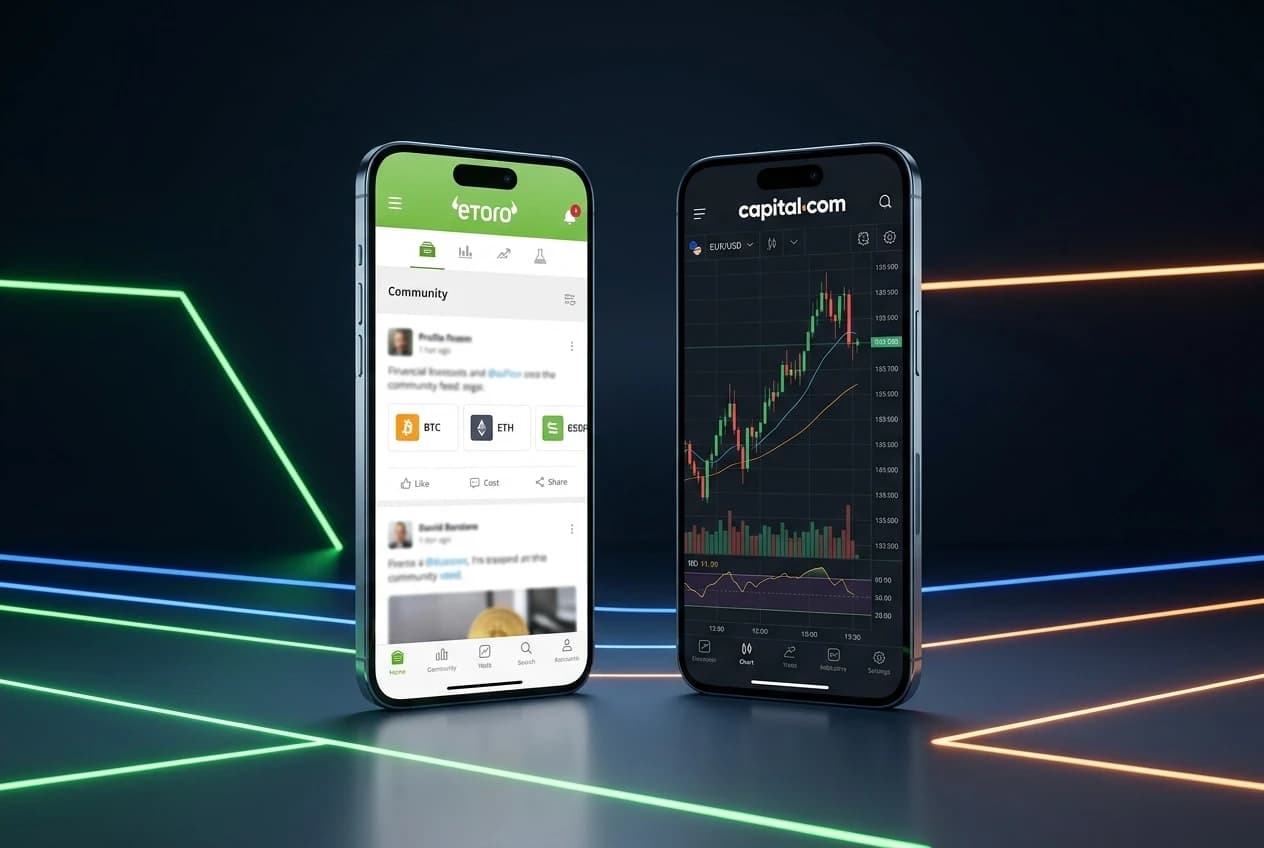
| Capital.com | Beginners / Low entry | FCA, CySEC, ASIC | $20 | 6,400+ |
| IG | Established traders / Breadth | FCA + 11 licenses | £1 | 19,500+ |
| Plus500 | Simple CFD-only trading | FCA, CySEC, ASIC, MAS | $100 | 2,800+ |
| XTB | DACH / European traders | FCA, KNF, CySEC | $0 | 5,400+ |
| eToro | Social trading / Multi-asset | FCA, CySEC, ASIC | $50 | 3,000+ |
1. Pepperstone — Best for Active Traders and Tight Spreads
Read our full Pepperstone Review
For active CFD traders — scalpers, day traders, high-frequency manual traders — Pepperstone delivers the tightest cost structure in the regulated space. On Razor accounts, EUR/USD spreads start from 0.0 pips with a flat $7 round-turn commission per lot on MT4/MT5, or $6 on cTrader. For traders executing hundreds of trades monthly, this works out significantly cheaper than spread-only brokers.
Execution quality matches the pricing. Average market order execution runs at 77 milliseconds — institutional-grade speed for retail. The platform suite covers MT4, MT5, cTrader, TradingView, and a proprietary mobile app, meeting traders wherever they already work.
Regulation is comprehensive: seven authorities including four tier-1 regulators — ASIC (Australia), FCA (UK), CySEC (Cyprus) and BaFin (Germany). With 400,000+ traders globally and a clean regulatory record since founding in 2010, Pepperstone has earned its consistent top rankings.
The CFD range covers 1,200+ instruments: 60+ forex pairs, major indices, commodities (gold, silver, oil), share CFDs on US, UK, EU and Australian stocks, and cryptocurrency CFDs. Not the broadest range (IG and Capital.com offer more), but sufficient for most active trading strategies.
Where Pepperstone is not the best choice: complete beginners. The platform assumes you understand spreads, swaps, lots, and the difference between Standard and Razor accounts. Educational materials exist but are secondary to the execution-focused offering.
Pros: 0.0-pip raw spreads · 77ms execution · 4 tier-1 regulators · MT4/MT5/cTrader/TradingView · No minimum deposit
Cons: Steeper learning curve · Smaller educational library · No real asset ownership
2. Capital.com — Best for Beginners with Low Entry
Read our full Capital.com Review
Capital.com is the cleanest entry point into regulated CFD trading for new traders. The $20 minimum deposit — among the lowest of any tier-1 regulated broker — combined with commission-free Standard accounts and an AI-powered learning system called Investmate, makes it genuinely accessible.
The instrument range is impressive: 6,400+ CFDs covering forex (147 pairs), indices, commodities, shares (3,000+ global stocks), and cryptocurrencies. This breadth exceeds Pepperstone and rivals IG, giving beginners room to explore different markets as they develop.
Spread costs are competitive: average EUR/USD spreads run around 0.64 pips (confirmed by independent live testing), with no per-trade commission on Standard accounts. The proprietary platform is modern and beginner-friendly, with TradingView integration for traders who want professional charting tools.
Regulation is solid: FCA, CySEC and ASIC — three tier-1 regulators. Capital.com earned BrokerChooser's "Best CFD Broker" award for 2026.
The honest caveats: Capital.com is CFD-only. You speculate on price movements; you never own actual shares or currency. The broker's published loss rate ranges from 63% to 81.7% across regions — the upper end above industry average. CFD trading is high-risk by definition.
For complete coverage, see our Capital.com 2026 review.
Pros: $20 minimum deposit · 6,400+ CFDs · 0.64-pip EUR/USD · Commission-free · TradingView integration · Investmate AI tutor
Cons: CFD-only · Loss rate up to 81.7% · No MetaTrader on main platform
3. IG — Best for Established Traders and Maximum Breadth
IG is the broker professional traders settle on when stability and depth matter more than the absolute lowest cost. Founded in 1974 and publicly traded on the London Stock Exchange (LON:IGG), it operates under eleven regulatory licenses worldwide — the most comprehensive regulatory footprint in the industry.
The instrument range is unmatched: 19,500+ CFDs across forex, indices, shares, commodities, bonds, options, and crypto. No other broker on this list comes close. For traders who want to diversify across asset classes or access niche markets, IG is structurally superior.
Platform options span the proprietary IG trading platform (web and mobile), MT4, and ProRealTime for advanced charting. The minimum deposit of £1 is among the lowest of any major broker — accessibility without compromising institutional infrastructure.
Spreads are competitive but not the tightest: EUR/USD runs around 0.6 pips on Standard accounts. Active traders with larger accounts can access Premium tiers with tighter pricing and dedicated support.
Where IG falls short: no native copy-trading feature (you'll need eToro for that), and the IG Academy education library has visibly stagnated. Spreads aren't the tightest for high-frequency scalpers — Pepperstone wins on raw cost.
Pros: 11 regulatory licenses · 19,500+ CFDs · LSE-listed transparency · £1 minimum deposit · 50 years track record
Cons: No native copy trading · Education library stagnant · Not cheapest for scalpers
4. Plus500 — Best for Simple CFD-Only Trading
Plus500 positions itself as a streamlined CFD platform — no MetaTrader complexity, no overwhelming feature set, just clean execution on a proprietary interface. For traders who want straightforward CFD access without platform learning curves, Plus500 delivers.
The platform covers 2,800+ CFD instruments: forex, indices, commodities, shares, ETFs, options, and crypto. Spreads are built into prices with no separate commission — the pricing model beginners often prefer for its simplicity. Execution is reliable, and the mobile app is among the cleanest in the industry.
Regulation is strong: FCA (UK), CySEC (Cyprus), ASIC (Australia), MAS (Singapore), and others. Plus500 is publicly listed on the London Stock Exchange (LON:PLUS), adding financial transparency.
The minimum deposit of $100 is higher than Capital.com ($20) or Pepperstone ($0), but still accessible for most traders. The platform includes guaranteed stop-loss orders (for a premium) — useful risk management for volatile markets.
Where Plus500 falls short: no MetaTrader, no cTrader, no TradingView integration. Advanced traders who want depth-of-market analysis, algorithmic trading, or professional charting will find the platform limiting. Spreads are wider than specialist brokers — Plus500 prioritizes simplicity over cost optimization.
Pros: Simple proprietary platform · 2,800+ CFDs · LSE-listed · Guaranteed stop-loss option · Strong regulation
Cons: No MT4/MT5/cTrader · Wider spreads · $100 minimum · Limited advanced tools
5. XTB — Best for DACH and European Traders
For traders in Germany, Austria, Switzerland and broader Central Europe, XTB combines tier-1 regulatory standing with native European infrastructure. Founded in 2002 in Warsaw, publicly listed on the Warsaw Stock Exchange since 2016, and regulated by seven authorities including FCA (UK), KNF (Poland), and CySEC (Cyprus), XTB offers German-fluent customer support, SEPA deposits, and regional tax-reporting integration.
The platform is the standout: xStation 5 is XTB's award-winning proprietary trading platform, featuring heat maps, market sentiment indicators, integrated stock screener, and performance analytics. ForexBrokers.com ranked it Best in Class for Overall, Ease of Use, and Beginners in 2026.
The CFD range covers 5,400+ instruments: 57 forex pairs, 50+ crypto CFDs, indices, commodities, and share CFDs. Uniquely, XTB also offers real stock ownership with 0% commission on stocks and ETFs for EU clients (up to €100,000 monthly turnover) — not just CFDs.
Spreads are competitive: EUR/USD from 0.5 pips on Standard accounts. No minimum deposit, no deposit fees.
Historical caveat: the Polish Financial Supervision Authority (KNF) fined XTB $2.7 million in 2018 for asymmetric price slippage practices. The broker has operated cleanly since.
Pros: 7 regulatory authorities · DACH infrastructure · xStation 5 platform · Real stock ownership · No minimum deposit
Cons: No MetaTrader for new clients · Historical 2018 KNF fine · Limited copy trading
6. eToro — Best for Social Trading and Multi-Asset Portfolios
eToro takes a different approach from the other five brokers on this list. It's the only one that combines CFD trading with real asset ownership (stocks, ETFs, cryptocurrency) and social trading through CopyTrader — the system that lets you automatically replicate the trades of top-performing eToro users.
The platform covers 3,000+ instruments: CFDs on forex, indices, commodities, and crypto, plus real ownership of 3,000+ stocks and ETFs and 70+ cryptocurrencies. For traders who want a diversified portfolio mixing speculative CFD positions with long-term investments, eToro is structurally unique.
Regulation covers FCA, CySEC, and ASIC — tier-1 across all three. eToro is publicly listed on the Nasdaq under ticker ETOR (since 2025), adding public-company transparency.
The trading economics are the weakest point for pure CFD trading. EUR/USD spreads run around 1 pip — wider than Capital.com's 0.64 or Pepperstone's raw spreads. Non-trading fees include a $5 withdrawal fee, $10 monthly inactivity fee (after 12 months), and currency conversion charges.
The asymmetric upside: if you want CopyTrader social trading, eToro is the only legitimate option at scale in the regulated space.
Pros: Real asset ownership · CopyTrader social system · Multi-asset portfolios · Nasdaq-listed · Strong regulation
Cons: Wider CFD spreads · $5 withdrawal fee · $10/month inactivity · Higher costs for active traders
What to look for in a CFD broker
The right broker depends on your trading profile. Six questions cut through the marketing:
How often do you trade? Active traders running dozens of trades weekly should prioritize tight spreads and low commissions (Pepperstone). Occasional traders who open a few positions monthly should prioritize ease of use and education (Capital.com, Plus500).
What's your experience level? Complete beginners benefit from AI-powered education (Capital.com's Investmate), simple interfaces (Plus500), and low minimum deposits. Experienced traders need advanced platforms (Pepperstone's cTrader, IG's ProRealTime) and raw pricing.
Which markets do you want to trade? Forex-focused traders need tight spreads on major pairs. Index traders need low overnight financing. Share CFD traders need broad stock coverage. Match broker strengths to your preferred markets.
Do you want social/copy trading? eToro is the only tier-1 option with meaningful CopyTrader scale. Pepperstone offers third-party integrations (DupliTrade, Myfxbook AutoTrade). Others don't support it.
What's your regulatory preference? All six are tier-1 regulated. IG holds 11 licenses globally. XTB has DACH-native KNF regulation. For pure EU residents, CySEC is the default — but home-jurisdiction supervision (XTB for Poland/DACH, IG for UK) is structurally stronger.
Do you need real asset ownership alongside CFDs? eToro and XTB offer real stocks. The others are CFD-only.
CFD trading costs explained
CFD costs go beyond the headline spread:
Spreads: The difference between buy and sell price. Quoted in pips for forex, points for indices. Lower is better for active traders.
Commissions: Some brokers (Pepperstone Razor) charge per-lot commissions alongside raw spreads. Others (Capital.com, Plus500) build all costs into the spread. Neither model is inherently better — calculate total cost for your trading volume.
Overnight financing: Holding CFDs overnight incurs swap charges based on the underlying interest rate differential. For position traders, this compounds. Short-term traders can largely ignore it.
Currency conversion: If your account currency differs from the instrument currency, you'll pay conversion fees. eToro charges 0.5-1.5% depending on tier. Others vary.
Non-trading fees: Inactivity fees (eToro: $10/month after 12 months), withdrawal fees ($5 at eToro, free at most others), and account maintenance vary by broker.
Our verdict
For active traders who prioritize cost: Pepperstone. The 0.0-pip Razor spreads with $7 commission deliver the lowest all-in costs for high-volume trading.
For beginners who need accessibility: Capital.com. The $20 minimum, AI-powered education, and 6,400+ instruments make it the cleanest starting point.
For established traders who want maximum breadth: IG. 19,500+ instruments, 11 regulatory licenses, and 50 years of track record.
For traders who want simplicity: Plus500. Clean platform, straightforward pricing, no complexity.
For DACH and European traders: XTB. Home-jurisdiction regulation, German-language support, real stock ownership.
For social trading and diversified portfolios: eToro. CopyTrader plus real asset ownership in one platform.
This analysis represents the editorial assessment of the BrokersRoom Research Desk based on publicly available data and live broker testing. It is not investment advice within the meaning of § 85 WpHG or analogous legislation. CFD trading carries substantial risk — between 63% and 89% of retail investor accounts lose money trading CFDs. BrokersRoom may earn affiliate commissions if you open an account with any of the brokers listed. Commission rates do not influence rankings. As of 28 May 2026.
Related Articles
Broker News
Capital.com vs. eToro 2026: Which Broker Wins for Your Strategy?

Broker News
CFD Demos with Real Spread Simulation 2026: Which Brokers Actually Deliver Live Conditions

Broker News
Is Capital.com Legitimate? The 2026 Safety Check

Broker News