Nvidia This Week: Record Numbers, Muted Stock — And Why the Real Story Is the Guidance
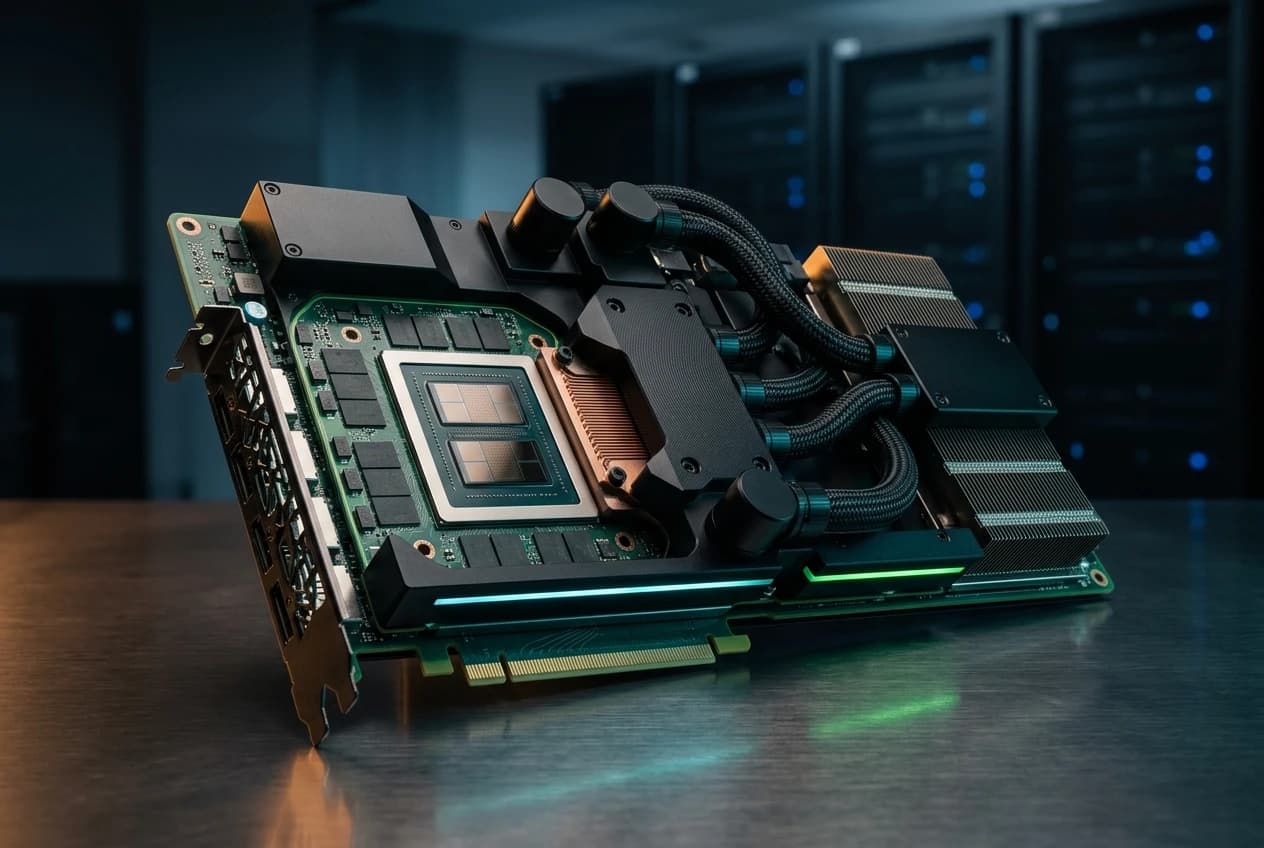
This was Nvidia's week. On Tuesday evening, May 20, the most-watched company in the world reported its first quarter of fiscal year 2027 — and once again delivered numbers that would have looked like science fiction just three years ago. Revenue of $81.6 billion, up 85 percent year-on-year, beat the Wall Street consensus of around $78.9 billion. Net income hit $58.3 billion, a 211 percent jump from the same quarter last year. And yet the stock opened the next morning slightly lower. Anyone who wants to understand the AI cycle of 2026 needs to take a closer look at this paradox.
The Numbers: Almost Boring in Their Magnitude
Nvidia has reached a stage where blowout quarters are simply expected. Q1 FY27 set new records across nearly every line. Data Center revenue, the segment that effectively is Nvidia these days, climbed to $75.2 billion — up 92 percent year-on-year and up 21 percent sequentially. Within that, networking revenue exploded by 199 percent to $14.8 billion, driven primarily by Spectrum-X Ethernet and NVLink switches for rack-scale Blackwell systems.
The margins remain extraordinary. The non-GAAP gross margin held at 75.0 percent, GAAP at 74.9 percent — the kind of figures one normally sees in software, not in hardware businesses with hundreds of billions in supply commitments. Operating income soared 147 percent to $53.5 billion. Non-GAAP earnings per share came in at $1.87, beating the $1.77 consensus.
These are not numbers that fit into normal business cycles. They are the figures of a company sitting at the bottleneck of the entire global AI buildout.
The Capital Return: The Dividend Shock
Beyond the operating figures, two announcements drew particular attention. The board approved an additional $80 billion in share buybacks — on top of the $38.5 billion still available under the existing authorization. And Nvidia raised its quarterly dividend from one cent to 25 cents per share. That is a 2,400 percent increase. In Q1 alone, the company returned around $20 billion to shareholders through buybacks and dividends.
This is a meaningful signal. A company that pays out this aggressively is communicating two things at once: confidence in future cash flow, and the realization that organic capital deployment is reaching practical limits at this scale. Even Nvidia cannot grow internally at the pace its income statement is generating cash.
The Guidance: $91 Billion — And Why That Is the Real Story
For investors, the headline number from this report is not Q1 revenue. It is Q2 guidance. Management projects $91 billion in revenue for the current quarter, plus or minus 2 percent. The Street consensus stood at around $86 billion. That is a clear five-billion-dollar beat on the most important forward indicator — and it suggests that the Blackwell-to-Rubin transition is proceeding without the dreaded "air pocket" where customers pause orders ahead of a new architecture.
The Vera Rubin platform was unveiled in parallel with earnings; samples are already in customer hands. Nvidia's CFO has spoken of roughly $500 billion in combined Blackwell and Rubin revenue visibility through the end of calendar 2026. Hyperscaler capex commitments for 2026 collectively reach about $725 billion — up 77 percent from the $410 billion spent in 2025. Microsoft, Alphabet, Amazon and Meta are leading this expansion. Amazon alone guides $200 billion for the year, Meta has raised its full-year capex range to $125–145 billion.
When Jensen Huang spoke of "the largest infrastructure expansion in human history" on the earnings call, it was less marketing than a description of an order book.
Why the Stock Didn't Pop
So why is Nvidia trading sideways despite all this? Because expectations have outpaced reality. The stock hit an all-time high of $236.54 on May 14 and closed at $223.47 the day of earnings. It is up roughly 20 percent year-to-date. Beating consensus by three percent is no longer enough — the buy-side "whisper number" had quietly migrated above $80 billion in revenue and a Q2 guide closer to $93 billion. Nvidia has now beaten estimates in 21 of the last 23 quarters and yet seen its stock fall after each of the three most recent reports.
This is the curse of a perfect company in an imperfect market. When everyone already expects perfection, delivering it is merely neutral.
Where the Trend Is Heading
The medium-term picture remains clearly constructive. Hyperscaler capex is rising, sovereign AI tripled to over $30 billion in fiscal 2026, and the Blackwell-Rubin product cadence is functioning. As long as the $725 billion hyperscaler commitment holds and Rubin delivers on schedule, Nvidia's revenue base could approach the trillion-dollar mark Jensen Huang sketched out at GTC 2026 by calendar 2027.
The short-term picture is harder to read. The stock needs a new narrative — not new numbers. That narrative will likely come from one of three directions: China reopening, sovereign AI scaling faster than modeled, or a Rubin product launch with even better unit economics than Blackwell. Until then, Nvidia remains what it has been for the past 18 months: the most powerful company in the world — and the hardest to surprise.