The Live Location Test: How to Unmask a Scam Broker in One WhatsApp Message
You deposited 250 euros. Maybe it felt like a small, sensible first step — a toe in the water. What you do not yet realise is that you have just been "converted," in the cold language of the people now handling you, and that a second, more skilled operator is about to spend days or weeks trying to turn that 250 euros into 2,500, or 25,000. This article gives you a single, simple request that will expose the entire operation in about thirty seconds — and explains exactly why it works.
How the machine actually works
To understand the test, you need to understand the machine, because these scams are run like call centres, with a division of labour borrowed straight from legitimate sales.
The first person who called you — friendly, encouraging, the one who talked you into that initial 250-euro deposit — is what the industry calls a conversion agent. Their only job is to turn a fresh lead into a paying victim. The moment your deposit clears, their work is done, and you are handed over, like a file passed across a desk, to the retention agent.
The retention agent is the dangerous one. This is the operator trained to keep you paying — to "retain" you as a source of money for as long as possible. They are patient, personable, and good at their job. They will tell you your account is performing brilliantly, show you a dashboard with numbers climbing, and explain that to unlock those profits, or to reach the next "tier," or to cover a "fee," you simply need to add more funds. Every conversation has one underlying purpose: another deposit, larger than the last. The retention agent is not managing your investment. You are the investment they are managing.
The move to WhatsApp — and the number that proves nothing
Fairly early on, the retention agent will usually suggest moving the conversation to WhatsApp. It feels friendly and convenient — more personal, more direct. It is also deliberate, because it pulls you off the record and onto a channel they control.
And here is where the geography game begins. They will give you a phone number, often a local one — a German number for a German client. If you ever notice it is a foreign number instead, they have a ready answer: "I'm based in our London office." And if it is a local number, they have an answer for that too: "We keep a German line for our German clients, but the desk itself is in London." Either way, the story is built to sound reassuring and to be impossible to disprove. The number tells you nothing. A WhatsApp number can be bought, ported, or spoofed from anywhere on earth, and the comforting little flag in front of it is just set dressing.
So by this point, two things are true. First, your original 250 euros is, realistically, already gone — money sent to these operations is very hard to recover, and you should make peace with that early, because the danger now is not the money you have lost but the money you are about to lose. Second, everything the retention agent says about who they are and where they sit is unverifiable by ordinary means. You need a test that cuts through all of it. You have one.
The test: ask for a live location
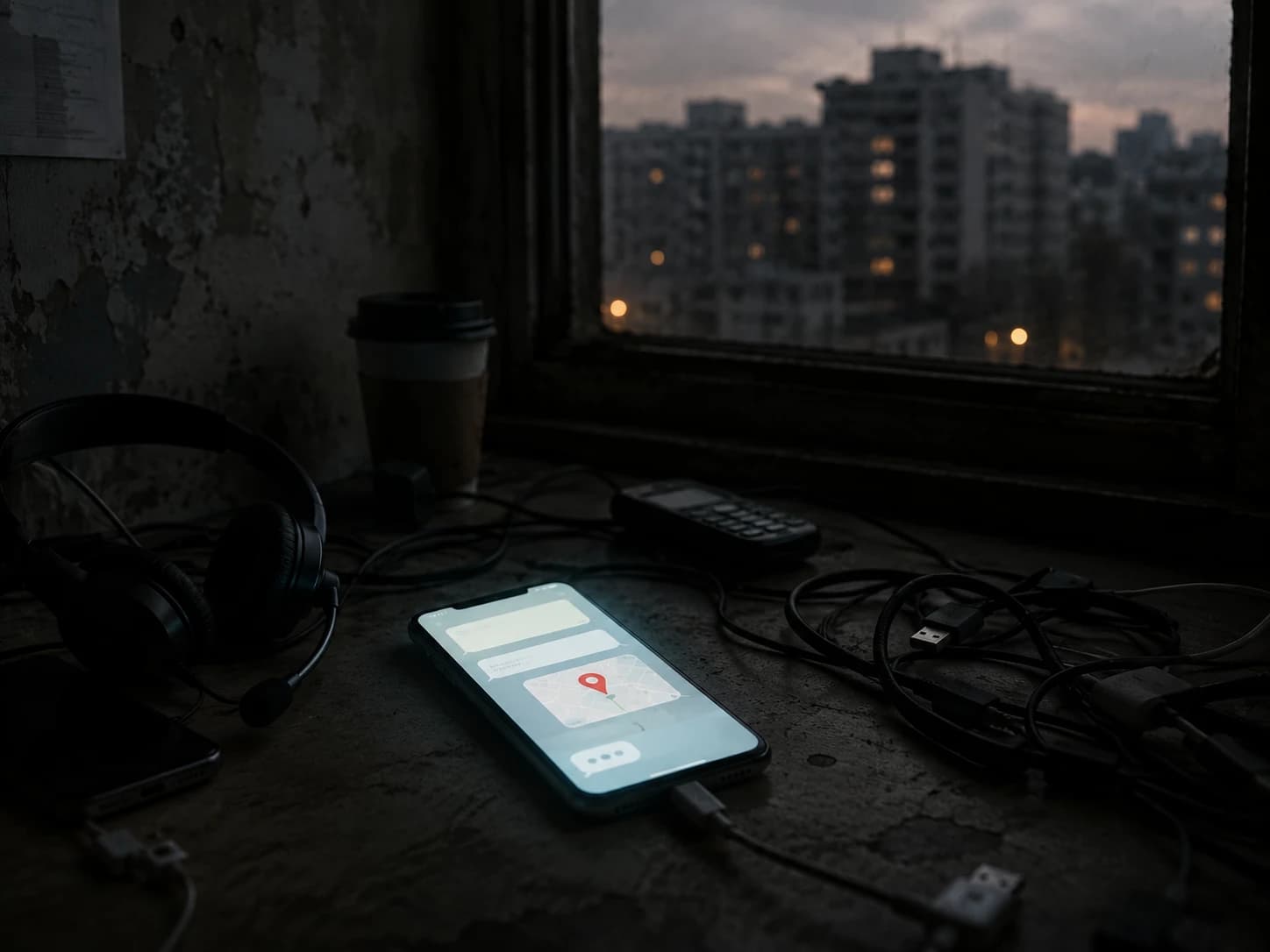
Here is the move. In your WhatsApp chat, ask the retention agent to send you their live location.
Not a video call — and the distinction is the whole point. If you ask to do a video call, a scammer has a perfectly plausible way out. They will say something like, "For security and compliance reasons, we're not permitted to do video calls with clients." And awkwardly, that excuse holds up, because even a genuine broker or adviser might reasonably decline a spontaneous video call with a retail client — there is no strong professional norm that says they must, so refusing it proves nothing.
A live location is completely different, and that is why it works. Think about what you are actually asking. If this person is sitting in a real brokerage office in London, as they claim, there is no reason on earth they cannot share their live location for a minute. It costs them nothing, reveals nothing they should want to hide, and confirms exactly the thing they have spent days insisting is true. A real person in a real London office can send it without a second thought.
The scammer cannot. They are not in London. They are sitting in a boiler room in Turkey, Cyprus, Serbia, Kosovo, Georgia, or somewhere similar — the cities where these operations cluster — and a live location would put the lie on the screen instantly. So watch what happens the moment you ask. They will not simply send it. They will stall, change the subject, get offended ("Don't you trust me, after everything I've done for your account?"), invent another security policy, or suddenly become very busy. The evasion is the answer. A genuine adviser shrugs and shares; a scammer squirms and deflects. You will know within a couple of messages.
Be honest with yourself about what the test does and does not prove. It is not a forensic instrument. A simple location pin can be faked, and a determined operator can spoof GPS, so do not treat a location they do send as ironclad proof of honesty. What is almost impossible to fake convincingly, on the spot, under a casual request, is a continuous live location from the place they claim to be — and far more telling than any coordinate is the behaviour the request triggers. The refusal, the excuse, the irritation: that is the tell, and it is extremely reliable, because an honest person in the place they say they are has no motive to refuse.
One safety point, because it matters: you ask for their live location. You never send yours, and you never hand over any further personal details, documents, or access to anyone you are testing. The flow of information runs one way.
What to do the moment it fails
When the retention agent dodges the live-location request — and they will — you have your confirmation. Now act on it, calmly and quickly, and understand what realistic success looks like here.
The hard truth first: the money you have already deposited is most likely gone, and very difficult to get back. Chasing it is not where your energy should go. The real victory available to you now is preventing the much larger loss the retention agent is steering you toward. So the first and most important step is the simplest: stop. Send no more money, no matter what the dashboard shows, no matter what "fee" or "tax" or "one final deposit" they claim stands between you and your profits. Those profits do not exist. The number on the screen is a picture, not a balance.
Then cut contact. Stop replying, block the number, and do not be drawn back in by the pressure, flattery, or threats that often follow when a victim goes quiet — that reaction is itself final confirmation of what they are.
Beyond that, take the practical steps even though the odds of recovery are low. Contact your bank or card provider immediately and tell them you have been defrauded; with card payments in particular, a fast chargeback occasionally works if you move within the window, though bank transfers and crypto are far harder. Report the fraud to your local police and to the relevant financial regulator, both to create a record and to help them warn others. Keep every screenshot, number, and name.
And be prepared for one more thing. Some time after a scam like this, victims are often contacted by someone offering to recover the lost funds — for a fee. That is not a rescue; it is the same criminals, or their associates, coming back for a second helping. It is a distinct trap with its own mechanics, and we cover it among our other scam-broker warnings. For now, simply know that anyone who phones you promising to get your money back for an upfront payment is lying.
The bottom line
The whole edifice — the friendly conversion call, the smooth retention agent, the German number, the London office, the climbing dashboard — is built to be unverifiable, designed so that you can never quite catch them in the lie. The live-location test collapses all of it with a single, reasonable request that an honest person in a real office answers in seconds and a scammer cannot answer at all.
So if you have deposited with a broker that found you through an ad and a phone call, and a charming "account manager" is now working you over WhatsApp for more, send them four words: "Send your live location." Then watch. The office in London will evaporate, and you will have saved yourself from the far bigger loss they were patiently building toward.
This article is educational and does not constitute financial or legal advice. If you believe you have been the victim of investment fraud, contact your bank and the relevant authorities promptly.