Best Metals Trading Brokers 2026: The 6 Platforms That Actually Deliver

Gold has run 65% year-to-date in 2026. Silver, platinum and palladium have all delivered double-digit returns. For the first time in over a decade, precious metals are the central macro story — driven by central bank diversification, structural fiscal trajectories, and the geopolitical premium we documented in our Gold-Prognose Mai 2026 and Iran-related editorial. The broker you trade through determines whether you capture this rally with reasonable cost structure or hand back significant returns through spreads, conversion fees, and execution friction. This guide identifies the six brokers that actually deliver across the use cases that matter — from beginner-friendly entry points to institutional multi-format platforms.
How we evaluated
Each broker on this list was assessed on seven weighted criteria specific to precious metals trading: spread costs on XAU/USD and other metal pairs, range of metals offered (gold, silver, platinum, palladium, copper), available trading formats (CFDs, futures, ETFs, options, spot, mining stocks), regulatory standing, platform quality, overnight financing rates, and minimum lot sizes for smaller accounts.
The full methodology behind our broker scores is documented on our Methodology page. We earn affiliate commissions from some brokers on this list — the disclosure block at the end covers that in full. Commission rates never influence rankings.
Quick comparison
| Broker | Best For | Metals Range | Min. Deposit | Gold Spread |
|---|---|---|---|---|
| Saxo Bank | Premium / Multi-format | Gold, Silver, Platinum, Palladium (6 formats each) | $0 (Classic) | Tight (varies by tier) |
| IG | Established / Breadth | Spot, CFDs, futures, options, shares | £1 | ~0.3 points |
| Pepperstone | Active Trading / Scalping | Gold, Silver, Platinum, Palladium CFDs | $0 | ~0.15 points (Razor) |
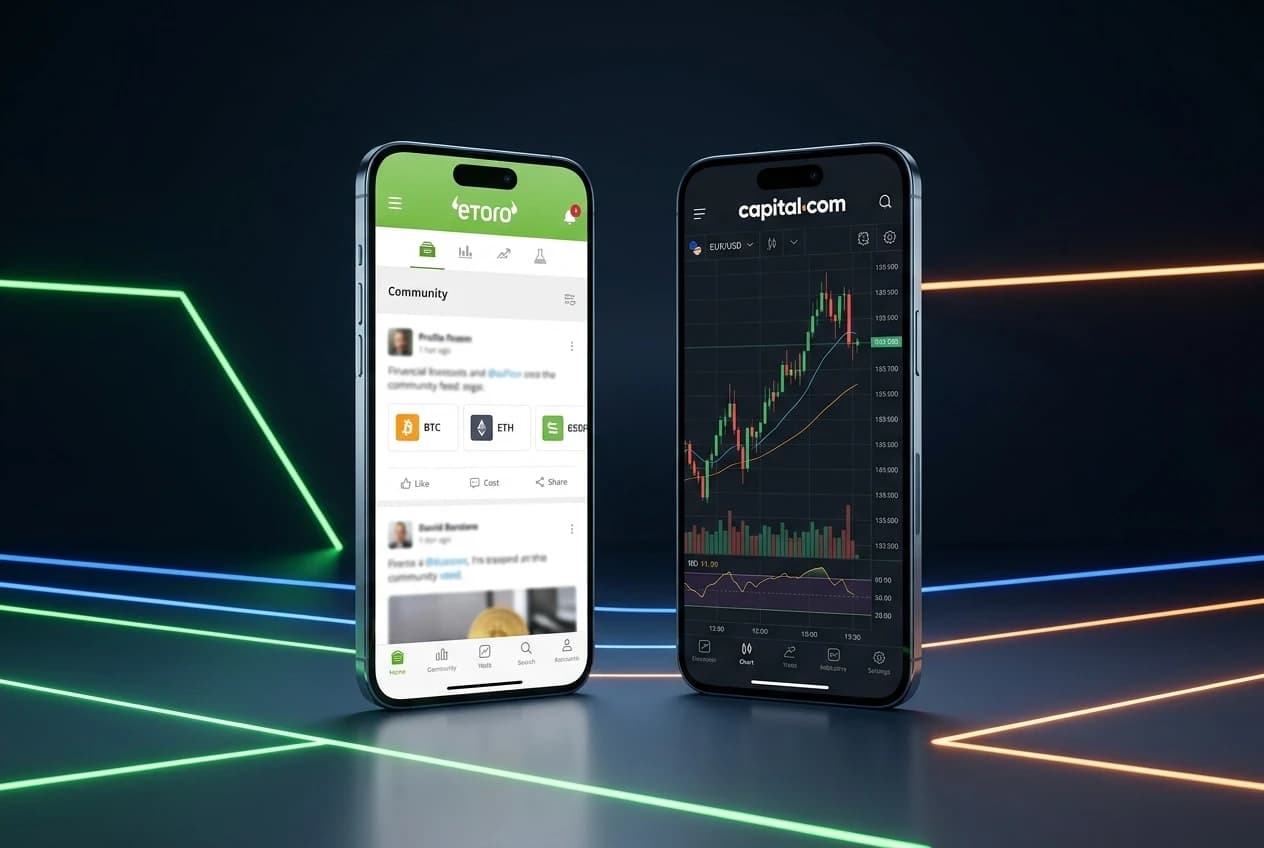
| Capital.com | Beginners / Low Entry | Gold, Silver, Platinum, Palladium CFDs | $20 | ~0.30 points |
| eToro | Diversified Investors | Gold ETFs + CFDs | $50 | ~0.45 points |
| XTB | DACH / Mining Stocks | Metals CFDs + real mining shares | $0 | ~0.35 points |
1. Saxo Bank — Best Premium / Multi-Format Platform
For serious metals traders who want maximum flexibility in how they gain exposure, Saxo Bank is the institutional-grade choice. Operating as a licensed Danish bank under strict tier-1 regulation in multiple jurisdictions, Saxo offers something no other broker on this list does: six different ways to trade gold — spot, CFDs, ETFs, gold COMEX futures, options, and Exchange-Traded Commodities (ETCs). This matters because different trading strategies require different instruments. A scalper wants tight-spread CFDs; a position holder wants futures or ETCs; a hedger wants options. Saxo bundles all six under one regulated account.
The platform stack is comparably broad. SaxoTraderGO is the entry-level web and mobile platform; SaxoTraderPRO is the institutional-grade desktop platform with advanced analytics, multi-screen support, and depth-of-market visualization. Both are widely considered among the most refined trading platforms in the retail space — particularly for traders moving from professional finance backgrounds.
Account structure has three tiers: Classic (no minimum), Platinum (higher deposit), and VIP (institutional level). Classic accounts can trade most metals products immediately; Platinum and VIP unlock tighter spreads, dedicated relationship managers, and access to certain bond and options markets. No inactivity fee, no platform fee, and Saxo's research is among the highest-quality in the industry.
Honest caveats: Saxo's pricing structure is complex. Bonds, certain options, and futures contracts carry higher fees than at specialist competitors. Some of the most attractive features (tight raw spreads, VIP research) require the Platinum or VIP tiers, which have meaningful minimum deposits. For traders who only want gold CFDs and nothing else, Pepperstone or Capital.com will be cheaper. Saxo's strength is range — and it costs accordingly.
Pros: 6 trading formats for gold · Tier-1 Danish bank regulation · 71,000+ instruments · SaxoTraderPRO platform · No inactivity fee · Premium research
Cons: Higher fees on bonds and exotic options · Best features require Platinum/VIP tiers · Complexity can confuse beginners
2. IG — Best Overall Metals Range and Established Brand
IG has been a constant in metals trading for over five decades. Founded in 1974 and publicly traded on the London Stock Exchange (LON:IGG), it operates under eleven regulatory licenses worldwide — the broadest regulatory footprint in the retail trading space. For metals specifically, IG offers gold spot, gold CFDs, gold futures, gold options, gold ETFs, and gold mining shares — essentially every conceivable way to gain precious metals exposure under one regulated banner.
Spreads on the primary metals are competitive: XAU/USD typically trades around 0.3 points on Standard accounts, with tighter spreads available on Premium accounts. Silver (XAG/USD), platinum (XPT/USD) and palladium (XPD/USD) all trade with comparable spread structures. The minimum deposit of £1 is among the lowest of any major regulated broker — making IG accessible without compromising on institutional infrastructure underneath.
The educational and research materials remain solid, even if the IG Academy library has visibly stagnated in recent years. The proprietary trading platform is mature, the mobile app is among the best in the retail space, and MT4 is supported for traders who prefer that environment.
Where IG falls short: no native copy trading (you'll need eToro or Pepperstone for that), and the spreads are not the tightest for high-frequency scalpers (Pepperstone's Razor account beats IG on raw cost). For everyone else who values regulatory depth, instrument breadth, and proven longevity, IG is the structurally safest choice.
Pros: 11 regulatory licenses · Six metals trading formats · LSE-listed transparency · £1 minimum deposit · Strong platform suite
Cons: No native copy trading · Spreads not the tightest for scalpers · IG Academy stagnant
3. Pepperstone — Best for Active Gold Trading and Scalping
Read our full Pepperstone Review
For active metals traders — scalpers, day traders, high-frequency manual traders — Pepperstone delivers the tightest cost structure in the regulated CFD space. On Razor accounts, gold spreads typically run around 0.15 points with a small commission added per trade — among the lowest costs we observed across any broker tested at peak trading hours.
The platform support is broad: MT4, MT5, cTrader, TradingView, and a recently-launched proprietary mobile app. For metals traders who already use MT4/MT5 for forex, integrating gold, silver, platinum and palladium trades into the same workflow is seamless. Execution speeds average 77 milliseconds for market orders — institutional-grade for retail.
Regulation is comprehensive: seven authorities including four tier-1 regulators — ASIC (Australia), FCA (UK), CySEC (Cyprus) and BaFin (Germany). With 400,000+ traders globally and a clean regulatory record since founding in 2010, the trust profile matches the cost profile.
Where Pepperstone is not the best choice: complete beginners. The platform assumes you understand spreads, swaps, and the difference between Standard and Razor accounts. Educational materials exist but are secondary. And the metals range is narrower in format — CFDs only, no spot gold, no futures, no ETFs. For traders who want format optionality, Saxo or IG are better choices.
Pros: 0.15-point gold spreads on Razor · 77ms execution · 4 tier-1 regulators · MT4/MT5/cTrader/TradingView · No minimum deposit
Cons: CFDs only (no futures, ETFs, or spot) · Steeper learning curve · Smaller educational library
4. Capital.com — Best for Beginners with Low Entry
Read our full Capital.com Review
Capital.com is the cleanest entry point into regulated metals trading for new traders. The $20 minimum deposit — among the lowest of any tier-1 regulated broker — combined with commission-free Standard accounts and an AI-powered learning system called Investmate, makes it accessible without sacrificing regulatory standing.
Gold CFD spreads typically run around 0.30 points on Standard accounts, with silver, platinum and palladium spreads at competitive levels. Capital.com offers metals CFDs alongside its broader range of 6,400+ instruments, with TradingView integration available for traders who prefer that charting environment.
Regulation is solid: FCA, CySEC and ASIC — three tier-1 regulators — for the primary entities. Capital.com earned BrokerChooser's "Best CFD Broker" award for 2026, reflecting the platform's overall strength in the CFD space.
The honest caveats: Capital.com is CFD-only for metals. You speculate on price; you don't own physical gold or futures contracts. The broker's published loss rate ranges from 63% to 81.7% across regions, with the upper end above industry average. CFD trading is high-risk by definition, and Capital.com's data confirms that most retail traders lose. For traders who want gold exposure without leverage, an ETF-providing broker like eToro or a multi-format platform like Saxo is structurally safer.
For full coverage, see our Capital.com 2026 review.
Pros: $20 minimum deposit · 0.30-point gold spreads · Commission-free · TradingView integration · Investmate AI tutor
Cons: CFD-only metals · Loss rate up to 81.7% · No real gold ownership
5. eToro — Best for Diversified Investors with ETF Access
eToro takes a different approach from the pure CFD brokers on this list. It's the only platform among the six that combines gold and metals CFD exposure with actual gold ETF ownership under one regulated account. For investors who want exposure to gold without leverage — or who want to combine speculative CFD positions with long-term ETF holdings — eToro is structurally unique.
The platform supports gold ETFs (including GLD), silver ETFs (SLV), and broader precious metals ETFs alongside CFDs on XAU/USD, XAG/USD, and other metal pairs. The CopyTrader social system lets you automatically replicate the trades of top-performing eToro users — useful for newer traders who want to follow experienced gold traders without studying technical analysis themselves.
Regulation covers FCA, CySEC, and ASIC — tier-1 across all three. eToro is publicly listed on the Nasdaq under the ticker ETOR (since 2025), adding public-company financial transparency unavailable at most private broker competitors.
The trading economics are the weakest point for active metals traders. Gold CFD spreads run around 0.45 points — wider than Capital.com's 0.30 or Pepperstone's 0.15. ETF purchases carry a 1% conversion fee. Non-trading fees include a $5 USD withdrawal fee, a $10 monthly inactivity fee after 12 months, and currency conversion charges that vary by Club tier. For active high-frequency trading, the cost stack is meaningful; for buy-and-hold ETF investing, the costs are reasonable.
Pros: Real gold ETF ownership · CopyTrader social system · Multi-asset portfolio · Nasdaq-listed transparency · Strong regulation
Cons: Wider spreads on metals CFDs · $5 withdrawal fee · $10/month inactivity fee · No futures or options
6. XTB — Best for DACH and Real Mining Stocks
For traders in Germany, Austria, Switzerland and broader Central Europe, XTB combines tier-1 regulatory standing with native European infrastructure. Founded in 2002 in Warsaw, publicly listed on the Warsaw Stock Exchange since 2016, and regulated by seven authorities including FCA, KNF and CySEC, XTB offers German-fluent customer support, SEPA deposits, and regional tax-reporting integration that pure international brokers don't match.
For metals specifically, XTB's differentiator is real gold mining shares. Alongside the standard metals CFD range (gold, silver, platinum, palladium), XTB lets you buy actual shares in major gold mining companies — Barrick Gold, Newmont, Agnico Eagle, Wheaton Precious Metals, and others — with 0% commission on real stocks for EU clients with monthly turnover up to €100,000. This is a structurally important feature: gold mining stocks often outperform gold itself during sustained metals rallies, and owning real shares (rather than CFDs) means no overnight financing costs and the right to dividends.
The xStation 5 platform is XTB's award-winning proprietary trading environment, featuring heat maps, market sentiment indicators, and integrated stock screener. ForexBrokers.com ranked it Best in Class for Overall and Beginners in 2026. Note: XTB stopped offering MetaTrader to new clients in 2024, so MT4/MT5 users will need to learn xStation 5.
Gold CFD spreads run around 0.35 points — competitive but not the tightest. The historical caveat: KNF fined XTB $2.7 million in 2018 for asymmetric price slippage practices. The broker has operated cleanly since, but transparency about historical issues is appropriate.
Pros: Real gold mining shares (0% commission EU) · DACH infrastructure · xStation 5 platform · 7 regulatory authorities · No minimum deposit
Cons: No MetaTrader for new clients · Historical 2018 KNF fine · CFD spreads competitive but not the tightest
What to look for in a metals broker
The right broker depends on your strategy. Six questions worth asking:
Do you want to own the asset or speculate on its price? Pure CFD brokers (Capital.com, Pepperstone) only offer leveraged price exposure. ETF and share brokers (eToro, XTB) let you own actual shares of gold-backed ETFs or mining companies. Multi-format brokers (IG, Saxo) offer both. Match your structure to your time horizon.
What's your trading frequency? Active scalpers should prioritize tight spreads (Pepperstone). Position traders care more about overnight financing costs and execution depth (Saxo, IG). Long-term investors care most about ETF cost ratios and the ability to hold without ongoing fees (eToro, XTB).
Which metals do you actually trade? Gold and silver are available everywhere on this list. Platinum and palladium are available at all six, but with varying liquidity. If you trade industrial metals (copper, aluminum, zinc), some platforms offer broader coverage than others.
What's your regulatory preference? All six are tier-1 regulated, but the structural strength varies. IG holds 11 licenses globally; XTB has DACH-native KNF regulation; Saxo Bank operates as a fully licensed Danish bank. For DACH residents, all six default to CySEC oversight — fine, but XTB's home-jurisdiction supervision and Saxo's bank-level regulation are structurally stronger.
Do you need multi-format flexibility? Spot, CFDs, futures, ETFs, options, mining shares — Saxo Bank and IG are the only two on this list that offer all six. The others specialize in CFDs (Capital.com, Pepperstone) or CFDs plus ETFs (eToro) or CFDs plus mining stocks (XTB).
What's your platform preference? MetaTrader users (MT4/MT5): Pepperstone and Capital.com. cTrader: Pepperstone. TradingView integration: Pepperstone and Capital.com. Proprietary high-end: Saxo, IG, XTB.
Physical metals vs. trading metals
Worth distinguishing clearly: the brokers on this list are for trading precious metals, not for buying physical bullion. None of them will deliver gold coins or bars to your door.
For physical metals ownership, you need a specialist bullion dealer (Bullion By Post, GoldSilver, Heraeus, Degussa in DACH) or a vaulted ownership platform (BullionVault, Goldmoney). Those services charge premium-to-spot rates and storage fees but give you direct physical ownership without counterparty risk.
The brokers in this guide handle the price exposure side — leveraged or unleveraged, short-term or long-term, with the regulatory protections appropriate to financial securities. They're the right choice for traders who want to express views on metals prices efficiently. They're the wrong choice for someone who wants physical gold under the mattress.
Our verdict
For most serious metals traders in 2026: Saxo Bank is the structurally optimal choice if you value format flexibility. The six trading formats for gold alone, combined with bank-level regulation and institutional-quality platforms, justify the slightly higher fees on certain instruments.
For established traders who want breadth without complexity: IG, with its £1 minimum deposit, 11 regulatory licenses, and proven longevity in metals markets.
For active scalpers and day traders: Pepperstone, no question. The 0.15-point gold spreads on Razor accounts deliver the lowest cost structure in the regulated CFD space.
For beginners and small accounts: Capital.com at $20 minimum, with the AI-powered Investmate tutor and TradingView integration as genuine differentiators.
For diversified investors who want gold ETFs alongside speculative positions: eToro, the only platform on this list that combines both at meaningful scale with social trading layered on top.
For DACH traders who want to add gold mining shares to their metals exposure: XTB, with 0% commission on real stocks for EU clients — a structurally important feature that no other broker on this list matches.
This analysis represents the editorial assessment of the BrokersRoom Research Desk based on publicly available data and live broker testing where applicable. It is not investment advice within the meaning of § 85 WpHG or analogous legislation. CFD and leveraged metals trading carries substantial risk — between 63% and 89% of retail investor accounts lose money trading CFDs. BrokersRoom may earn affiliate commissions if you open an account with any of the brokers listed via links on this page. Commission rates do not influence our rankings or editorial assessments. Sources: ForexBrokers.com, BrokerChooser, BestBrokers, FXEmpire, Volity, Investor's Centre, official broker fee schedules. As of 28 May 2026.