CFD Demos with Real Spread Simulation 2026: Which Brokers Actually Deliver Live Conditions

CFD demo accounts are misleading. Not because they fake the prices — most use real market data feeds — but because they quietly remove the friction that determines real-world profitability. Tighter spreads than live accounts. Zero slippage on volatile orders. Instant execution. No requotes during news. The result: traders develop confidence in a strategy that works in simulation and then watch it fail when deployed with real capital. The gap between demo performance and live performance is not random — it's structural, and most brokers don't talk about it. This guide identifies the six CFD brokers whose demos actually mirror live conditions, and explains exactly what "real spread simulation" should mean.
The honest demo problem
Industry data is clear on this. Across surveyed retail traders who succeeded in demo accounts and then transitioned to live trading, the most common reasons for performance collapse were not psychological — they were structural. Live accounts showed wider spreads, especially during high-impact news. Slippage materialized on stop-loss orders that always filled cleanly in demo. Overnight financing was higher than the demo had charged. Execution speed dropped during volatility. None of these are random — they are real features of live market conditions that demo accounts often smooth away.
This serves the broker. A trader who succeeds in a demo signs up for a live account. A trader whose demo accurately mirrors live frictions might never make the transition. The brokers below are the exceptions — platforms that prioritize realism over conversion psychology.
Quick comparison
| Broker | Spread Realism | Sentiment Data | Slippage Simulation | Demo Duration |
|---|---|---|---|---|
| IG | Live spreads aligned to live products | Limited | Partial | Unlimited |
| CMC Markets | Live spreads (Standard + FX Active mirrored) | Yes — Client Sentiment Indicator | Partial | Unlimited |
| Pepperstone | Raw spreads from 0.0 (Razor mirror) | Limited | Realistic | Unlimited |
| XTB | Live spreads on xStation 5 | Yes — Heat maps + sentiment indicators | Partial | Unlimited |
| Capital.com | Live spreads aligned to live | Limited | Partial | Unlimited |
| OANDA | Granular pricing (fractional pips) | Order Book data available | Realistic | Unlimited |
1. CMC Markets — Best for Live Sentiment Data
CMC Markets is the broker that gets closest to professional-grade demo realism. The NextGen platform's demo accounts mirror the live Standard and FX Active pricing structures faithfully — Standard with 0.7-pip EUR/USD spreads commission-free, FX Active with raw 0.0-pip spreads plus the $5 round-turn commission. Crucially, these spreads fluctuate live with market conditions — wider during news releases, tighter during liquid sessions.
The standout feature: NextGen's Client Sentiment Indicator shows real-time positioning data of actual CMC clients on each instrument. This is genuine institutional-grade information, normally available only via dedicated subscription services. Demo users see the same sentiment data live traders see. For traders learning to read crowd positioning, this is unmatched in the regulated retail demo space.
The 37-year LSE-listed CMC also publishes daily market analysis from its in-house research team — demo users get access to the same Reuters news feed and Morningstar equity research that paid live accounts use.
2. IG — Best Overall Realism Across 17,000+ Markets
IG's demo account is structurally the closest to its live environment because IG operates as a market maker for the majority of its CFD products — the demo prices are the live prices, with the same spread structure that live accounts pay. EUR/USD around 0.6 pips on Standard, gold around 0.3 points, indices spreads aligned to live products.
The demo account includes 17,000+ tradeable markets — the broadest demo simulation available in retail CFD trading. £10,000 in virtual capital provides ample testing room. IG's demo is unlimited in duration and can run in parallel to a live account, allowing traders to test new strategies on demo without disrupting live positions.
The IG Academy education library is available within the demo, including market commentary and event analysis from IG's in-house research team. Slippage simulation is partial — IG smooths some volatility events that might affect live execution.
Pros: Live spread parity · 17,000+ markets · Unlimited duration · Parallel demo/live accounts · IG Academy access
Cons: Partial slippage simulation · Limited sentiment data · Some volatility smoothing
3. Pepperstone — Best for Raw Spread Realism
For traders specifically testing whether they can profit on Pepperstone's Razor account structure, the demo mirrors it precisely. Raw spreads from 0.0 pips with the actual $7 round-turn commission on MT4/MT5 ($6 on cTrader) — the same cost structure live traders pay. This matters because Razor account profitability calculation requires accurate commission accounting, and many demos hide this.
The execution speed in demo runs at the same 77-millisecond average as live accounts — Pepperstone genuinely does not slow demos to make them easier to win. Slippage simulation is among the more realistic in the space, particularly on stop-loss orders during news events.
Platform coverage is broad: MT4, MT5, cTrader, TradingView, and proprietary mobile, all available in demo. Sentiment data is limited compared to CMC or XTB, but third-party tools like Myfxbook AutoTrade and DupliTrade integrate for traders who want copy-trading simulation alongside spread testing.
Pros: Razor account mirror · 0.0-pip raw spreads · 77ms execution parity · Realistic slippage · Multi-platform demo
Cons: Limited sentiment data · Steeper learning curve · No proprietary sentiment tools
4. XTB — Best for DACH Traders Plus Live Sentiment
XTB's xStation 5 platform includes Market Sentiment Indicators and heat maps in both demo and live environments. These show real-time positioning data, volume concentration by price level, and asset performance heat maps — features normally reserved for institutional platforms. For DACH traders, xStation 5 is available in German with the same sentiment data German live traders see.
Spread realism on the demo aligns with the Standard account: 0.5–0.9 pips on EUR/USD depending on volatility. Spreads fluctuate live — not the smooth, fixed pricing some competitor demos use. The demo runs without time limit and integrates the same Reuters news feed and economic calendar as live accounts.
The structural caveat: XTB stopped offering MetaTrader to new clients in 2024. Demo users learn xStation 5; if you plan to eventually migrate to MT4/MT5 at another broker, the platform learning is non-transferable.
Pros: Live sentiment indicators · Heat maps · German-language support · Live spread fluctuation · Unlimited demo
Cons: No MetaTrader for new clients · Platform learning non-transferable · Partial slippage simulation
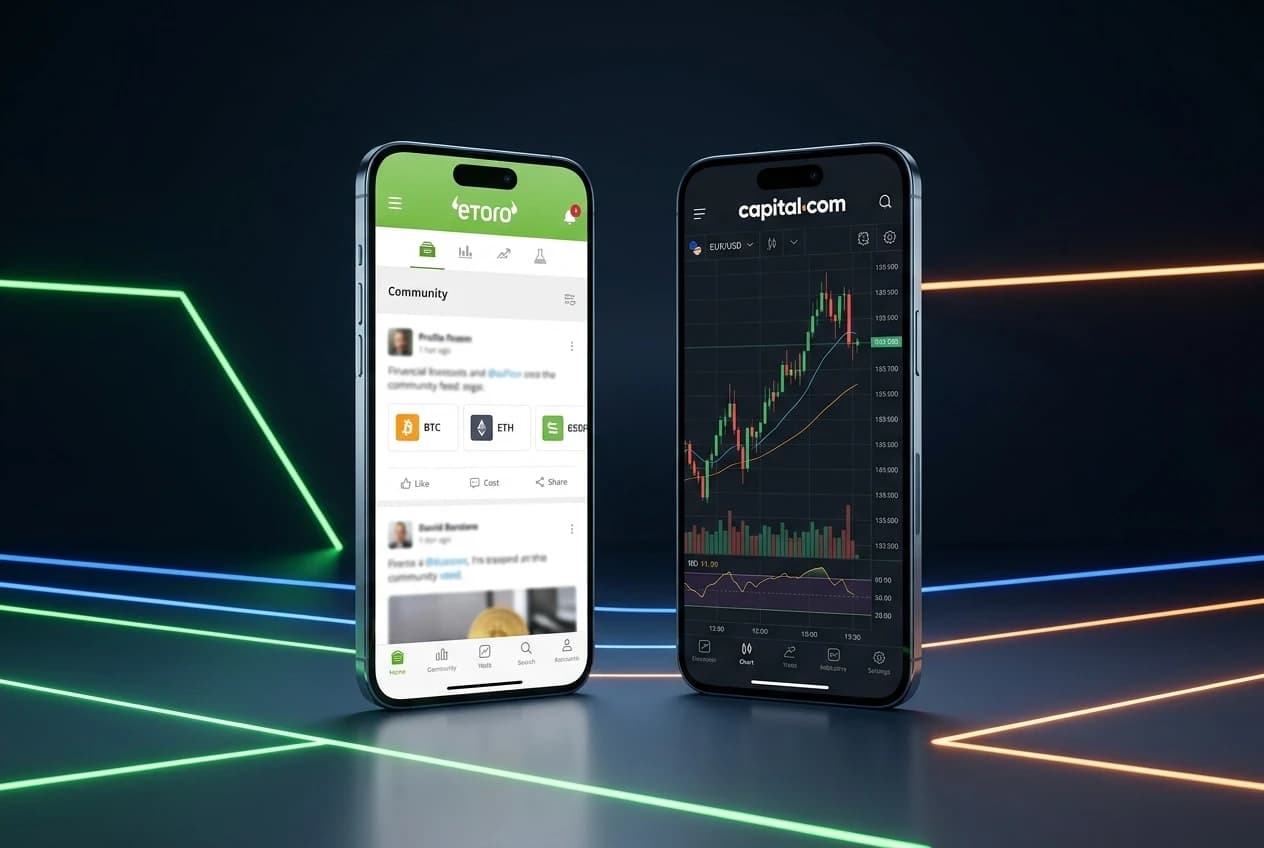
5. Capital.com — Best for Beginners with Realistic Spreads
For new traders specifically, Capital.com's demo is the cleanest entry into realistic CFD practice. The 0.64-pip average EUR/USD spread confirmed by independent live testing is exactly what demo users see — Capital.com does not artificially tighten demo spreads to inflate beginner success rates.
The AI-powered Investmate tutor runs in demo accounts, providing educational context as traders place practice trades. The TradingView integration is identical between demo and live, meaning chart setups carry over without modification. Demo duration is unlimited; virtual capital is refreshable.
Where Capital.com is less competitive on demo realism: sentiment data is more limited than CMC or XTB, and slippage simulation is partial — the demo smooths some news-event volatility that affects live execution.
For complete coverage, see our Capital.com 2026 review.
Pros: Realistic 0.64-pip spreads · Investmate AI tutor · TradingView parity · Unlimited demo · Refreshable capital
Cons: Limited sentiment data · Partial slippage simulation · Some volatility smoothing
6. OANDA — Best for Granular Pricing and Order Book Data
OANDA's demo replicates one of the most underrated realism features in retail trading: fractional pip pricing. Spreads are quoted in pipettes (tenths of a pip), giving traders the same granular view of pricing that institutional traders see. For algorithmic traders or scalpers testing strategies dependent on precise spread costs, this matters.
OANDA also makes Order Book positioning data available in demo accounts — actual positions of OANDA's client base, displayed by price level. This is similar to CMC's Sentiment Indicator but uses raw order data rather than aggregated sentiment. Different lens, same institutional value.
OANDA's MarketPulse research and economic calendar integrate into demo accounts at the same depth as live. Slippage simulation is realistic — OANDA does not artificially smooth volatility for demo users.
Pros: Fractional pip pricing · Order Book data · Realistic slippage · MarketPulse research · Unlimited demo
Cons: Platform dated compared to competitors · Higher spreads than raw-spread specialists · Limited copy trading
What "real spread simulation" actually means
Five features distinguish a genuinely realistic demo from a marketing tool:
Live spread fluctuation — spreads should widen during news events and tighten during liquid sessions, exactly as in live accounts. A demo with fixed pricing is misleading.
Realistic slippage — when a stop-loss order is triggered during high volatility, the fill price should reflect the actual liquidity available at that moment, not a clean exit at the stop level.
Accurate overnight financing — swap fees should match the broker's live financing rates. Demos that under-charge financing make swing trading look more profitable than it actually is.
Execution latency parity — order execution time in demo should match live account execution times. Demos with instant fills hide a structural feature that affects strategy performance.
Live sentiment or order book data — institutional-grade positioning data lets traders learn to read crowd flow, a skill that transfers directly to live trading.
If your current demo lacks two or more of these features, your demo performance is likely overstating your live performance potential. Switch to a broker that provides realistic simulation before scaling up.
Our verdict
For traders who want institutional-grade demo realism with the strongest sentiment data: CMC Markets or XTB — both include genuine real-time positioning indicators that no other broker on this list matches at this depth.
For traders specifically testing professional commission-based account structures: Pepperstone, with its Razor account demo mirroring live cost structure precisely.
For traders wanting the broadest market coverage: IG, with 17,000+ markets and the strongest live-spread parity across asset classes.
For DACH traders who want German-language interface plus sentiment data: XTB with xStation 5.
For beginners who need realistic spreads without overwhelming complexity: Capital.com, at $20 minimum deposit with the Investmate AI tutor.
For algorithmic traders testing fractional-pip strategies: OANDA, with granular pricing and order book data.
For broader CFD broker recommendations beyond demo realism, see our Best CFD Brokers 2026 guide and Best CFD Demo Accounts 2026 overview.
This analysis represents the editorial assessment of the BrokersRoom Research Desk based on publicly available data and hands-on demo testing across all six brokers. It is not investment advice within the meaning of § 85 WpHG or analogous legislation. CFD trading carries substantial risk — between 63% and 89% of retail investor accounts lose money trading CFDs. BrokersRoom may earn affiliate commissions if you open an account with any of the brokers listed via links on this page. Commission rates do not influence our rankings or editorial assessments. As of 29 May 2026.